
Teton County Sex Offender Checks
The Idaho Central Sex Offender Registry is the authoritative public source for Teton County. Idaho State Police BCI runs it with information from county sheriffs, IDOC, and juvenile justice. The Teton County sheriff is the local registration and verification agency.
The registry warns that text searches can misidentify a person and only fingerprints establish identity. Public data aids safety and awareness, but the map is not a full census. Review the status and verifying agency before reaching a conclusion.
Search Teton County Without a Name
Select Teton on the County tab to avoid guessing a surname. City and ZIP routes narrow a place, while Map uses an address and set radius. Compare several profile fields rather than one name.
The official registry search shows each route.
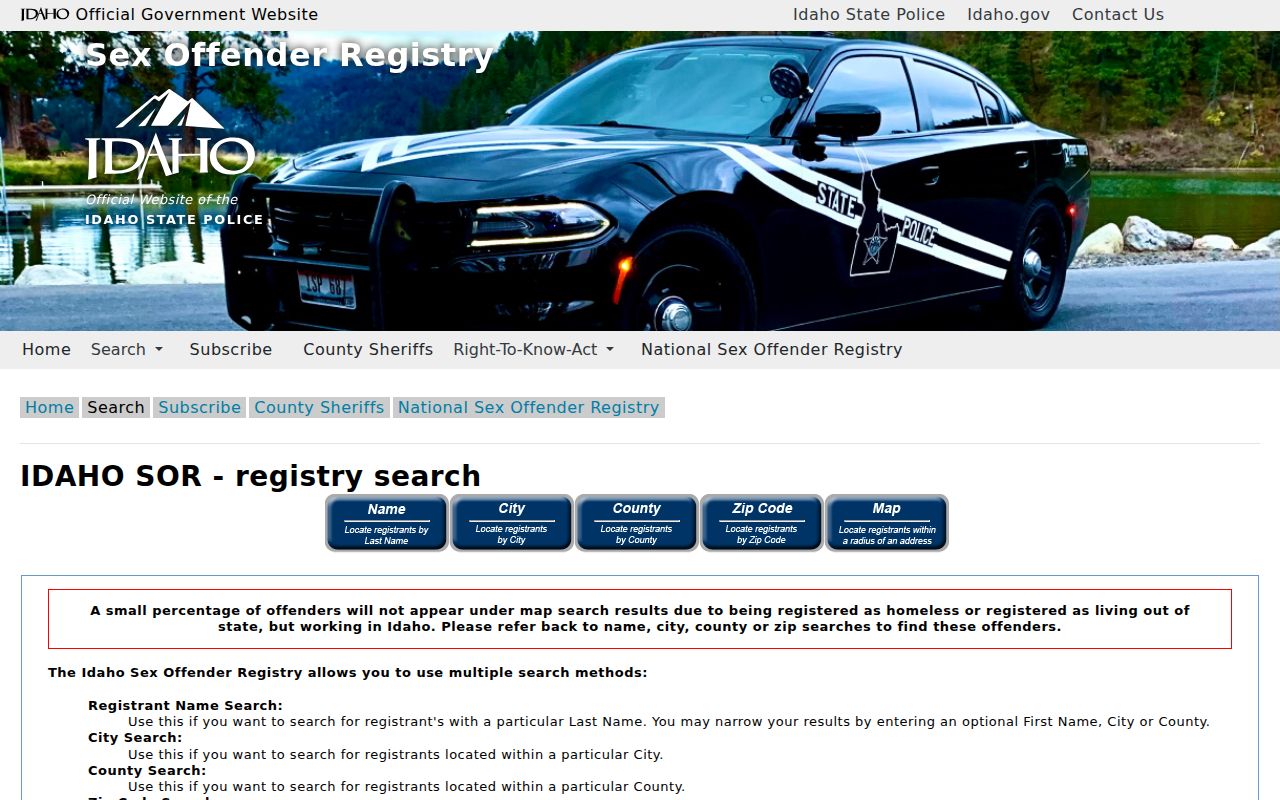
The separate tabs let a reader choose a county check without forcing a name match.
Idaho Central Sex Offender Registry Searches
Name search requires a surname and can add first name or city. County, city, and ZIP routes return geographic results. Map offers 1-, 3-, and 5-mile choices. Some homeless registrants and out-of-state residents who work in Idaho may not appear as map pins.
- Open the ISP registry and accept its use terms.
- Choose Name, City, County, ZIP, or Map.
- Select Teton or enter the minimum fields.
- Review candidates without treating proximity as identity.
- Open a profile and compare several identifiers.
- Contact the verifying agency for a current fact.
| Field Label | Type | Required | Notes |
|---|---|---|---|
| Last name | Text | Name route | Primary surname |
| First name | Text | No | Narrows results |
| City or ZIP | Text/select | For that route | Place-based list |
| County | Select | County route | Select Teton |
| Radius | Map | Map route | 1, 3, or 5 miles |
Teton County Map Search Limits
A pin is not fingerprint identification. An address can change, and some registrants do not map in the usual way. Use the County, City, and ZIP routes too. A blank radius result does not prove no registrant has a local tie. The registry itself cautions that homeless registrants and out-of-state residents who work in Idaho can be missing from map results.
When a search crosses into Wyoming, add the federal national portal. Return to the listed jurisdiction's official profile for current detail. Search nearby ZIP codes and cities when an address sits near a county or state boundary. A map is best used to form the next search, not to certify that a place has no registrants.
When two profiles look similar, compare date of birth, photograph, aliases, offense jurisdiction, and verifying agency. Contact the Teton County sheriff if a local verification fact is unclear. Do not try to resolve uncertainty by visiting the displayed address.
Registry Profiles: What They Show
A profile may show name, aliases, date of birth, photograph, physical description, address or habitual location, school, temporary lodging, qualifying offense, conviction place, status, and verifying agency. Idaho Code §18-8323 controls public fields. Private identifiers and police-only data remain withheld.
| Name and aliases | Current and prior public names |
|---|---|
| Photo and description | Visual identity fields |
| Registered location | Residence or habitual-location data when public |
| Offense and statute | Qualifying offense information |
| Category | Idaho duty or designation, not a federal tier |
| Status | Current registry compliance label |
Teton County Registry Status Terms
The portal lists violent sexual predators, noncompliant offenders, and pending status. These are legal or administrative labels, not a new conviction and not a simple risk score. Read the underlying profile and law. A compliance label describes registry administration at that point in time. It does not add a new offense to the court history.
- Noncompliant
- A current compliance status to report to law enforcement.
- Pending
- An administrative label needing registry context.
- Violent sexual predator
- A formal Idaho designation with heightened duties.
Do not contact, follow, or investigate a listed person. Give the sheriff the profile name, displayed status, and the specific concern. Law enforcement can compare nonpublic information and determine whether follow-up is needed.
Registration Levels and Duties in Idaho
Idaho does not publish a simple public Tier I, II, and III chart. Duty and duration depend on the offense and designation under title 18, chapter 83. Many duties last for life. Release requires the statutory minimum and findings where the law allows it.
| Level / Tier | Duration | Verification Frequency |
|---|---|---|
| Registered sexual offender | Offense-specific; many are life | Statute and agency control |
| Violent sexual predator | Lifetime/enhanced duties | Heightened requirements |
| Juvenile registrant | Separate chapter 84 rules | Separate treatment |
| Noncompliant or pending | Status, not duration tier | Until status changes |
Cross-State Searches Near Teton County
The National Sex Offender Public Website searches participating jurisdictions and helps when the area crosses the Wyoming line. It does not replace Idaho's profile or Teton sheriff verification. Teton Valley travel patterns make this distinction useful: an Idaho county filter cannot be expected to return a record maintained only by another state.
Search NSOPW with enough identifying information to separate common names. Then follow its link back to the maintaining jurisdiction and check the current profile there. Differences in public fields or labels can reflect different state laws rather than an error.
The official national screen adds that wider search layer.
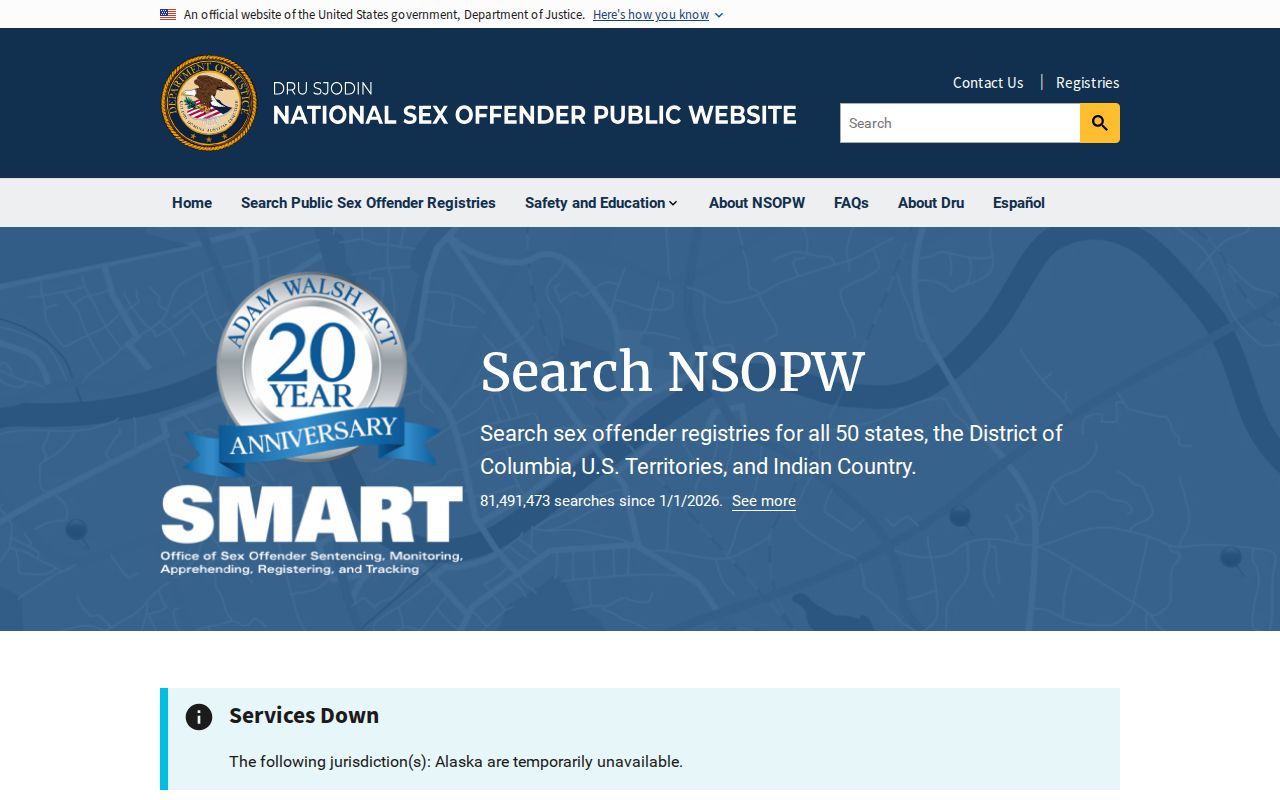
Use the result to reach the maintaining jurisdiction's primary record. If Idaho and another state show conflicting details, ask the listed verifying agencies rather than choosing the more alarming entry.
Using Teton Registry Information Lawfully
Idaho permits registry data for protection and community awareness. It forbids or warns against injury, harassment, intimidation, unlawful use, commercial use, and list compilation under title 18, chapter 83. The data does not authorize threats, trespass, confrontation, or surveillance.
Misuse warning: Using Idaho registry information to harass, threaten, injure, or intimidate a registrant violates Idaho law.
Report suspected noncompliance to TCSO or ISP. The access agreement states these limits.
The official registry warning comes before search.
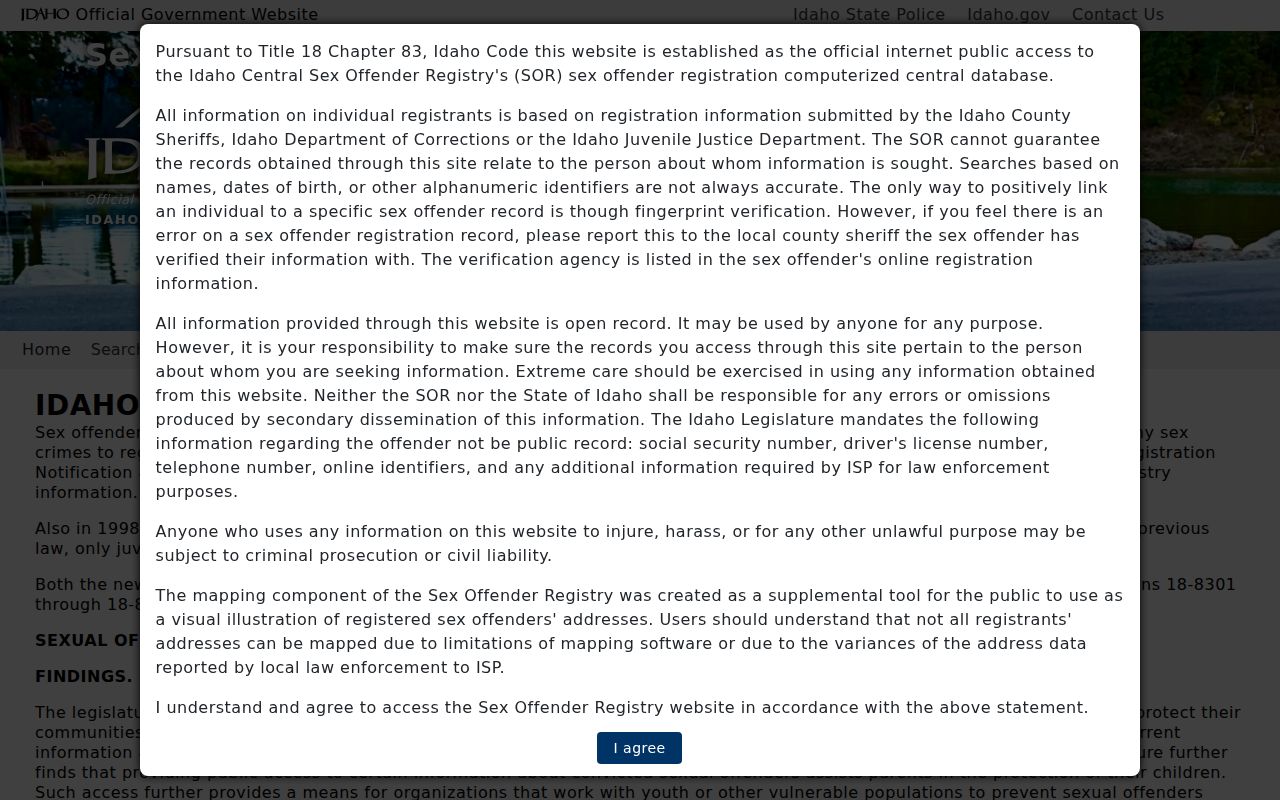
Its terms should guide how each public result is used.
Teton County Registry Alerts
The Subscribe tab can add notice of later changes. A one-time search is only a snapshot, and an alert is not proof of a violation. Keep the selected area and contact details current, then open the official profile when a notice arrives. The alert should prompt a new official check, not be treated as a full profile saved in email.
Notification and search serve different needs. A county search reviews the records available now. A subscription may flag a later update within its selected scope. Neither guarantees notice of every person who travels through Teton County or every change before the registry receives it.
If the subscription route is unavailable, return to the main ISP registry and ask ISP about current notification access. Never replace it with an aggregator list. ISP's official system is the source for the terms, coverage, and status attached to the notice.
Teton Sheriff Registry Verification
The Teton County sheriff is the local registration and verification agency, while ISP operates the statewide public system. That division matters when a profile question is local. ISP can explain the portal and public record; the sheriff can address a suspected local compliance issue through official channels.
The research does not support publishing appointment hours, required documents, or a local registration fee. Confirm those details directly instead of relying on a prior visit or a third-party directory. Office procedures can change even when the statewide search address remains the same.
For a correction, identify the exact field and the profile at issue. For suspected noncompliance, state the observed fact without confronting the registrant. The agency can decide what is relevant and what action, if any, is lawful.